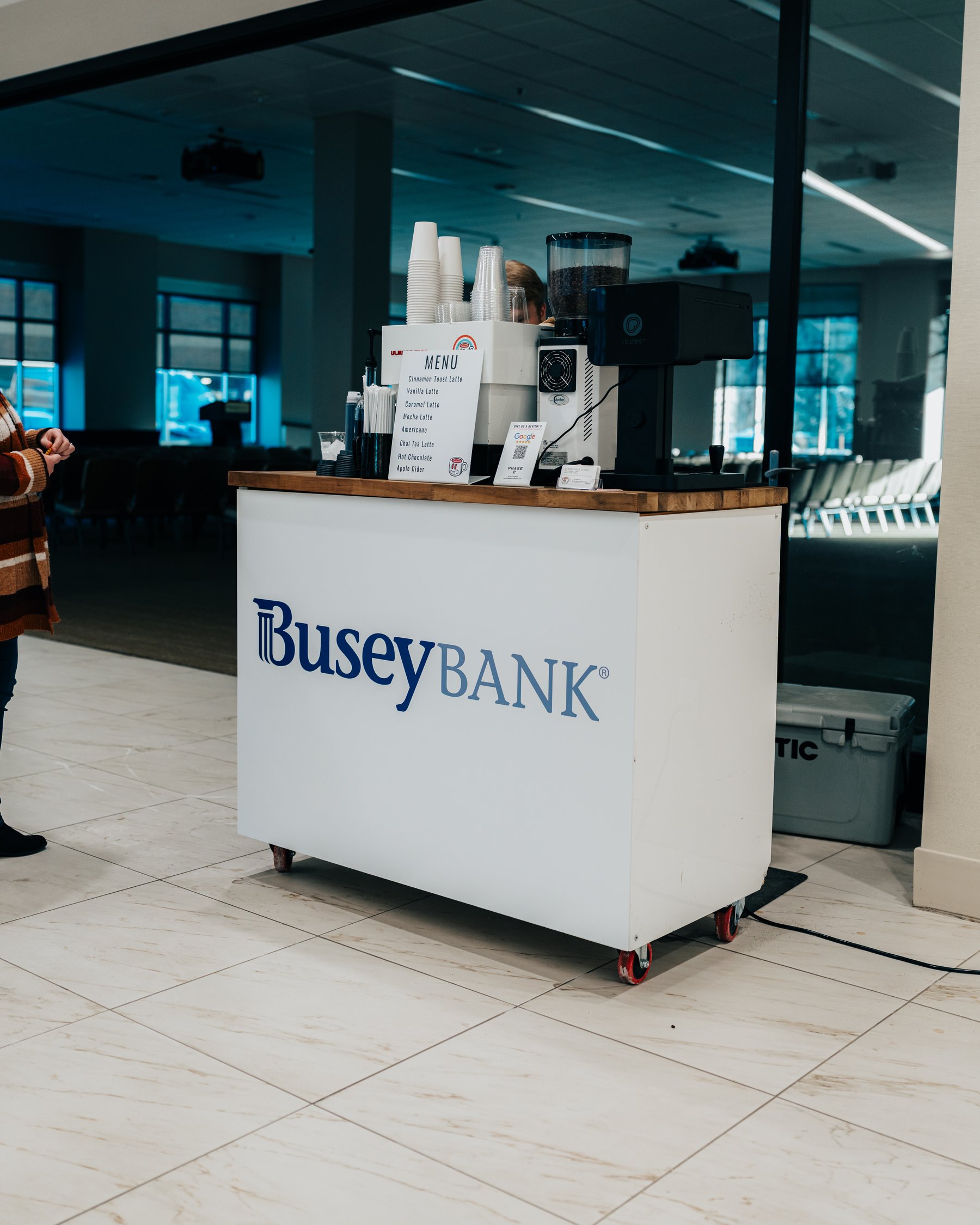
When Busey Bank's team reached out, the ask was clear but the stakes were high. Executives were flying in from out of state. Employees across departments were gathering in one place, which doesn't happen often. And the leadership team wanted to create something that felt like a genuine reflection of who they are as a company — not just another catered meeting with a folding table and grocery store pastries.
They wanted conversations to start before anyone sat down. They wanted the experience to feel like it matched the quality of the institution they'd built. And they wanted their people — the ones who show up every day and make the bank run — to feel genuinely valued in a way that a gift card or an email never quite accomplishes.
That's a specific set of goals. And it's one we've seen more corporate event planners and HR teams wrestling with as the bar for employee experience keeps rising. So we're going to break down exactly what makes a corporate event memorable, why most of them aren't, and what changed the moment a premium coffee experience became part of the equation.
THE REAL PROBLEM WITH MOST CORPORATE EVENTS
The problem isn't budget. It isn't even effort. Most corporate event planners put in real work trying to make these things land. The problem is that most corporate events are designed around logistics rather than experience — around what needs to happen rather than how people will feel.
Think about the events that stick in your memory versus the ones that evaporate by Tuesday. The ones that stick almost always have something in common: they created a moment of genuine human interaction. Someone handed you something they made. You had a conversation you weren't expecting to have. You felt like the people who put the event together actually thought about you specifically, not just the group in aggregate.
Most corporate events don't engineer for that. They engineer for headcounts and catering minimums and AV setups. Which is fine — those things matter. But they're the floor, not the ceiling.
"The best corporate events don't feel like events. They feel like someone genuinely thought about the people showing up — not just the agenda."
EXPERIENCE IS THE DIFFERENTIATOR
Here's something we've noticed across hundreds of events: what people remember most is almost never the speaker or the presentation. It's the thing that happened in the margins. The conversation that started while waiting in line. The unexpected quality of something they didn't expect to be good. The detail that signaled someone actually cared.
A premium mobile coffee experience does something specific in a corporate setting. It creates a gathering point — a natural place where people slow down, interact with a barista, make a choice, and have a moment. And in that moment, conversations start. People who don't work in the same building find themselves standing next to each other talking about whether they want oat milk or whole milk, and somehow that turns into something real.
This isn't an accident. It's physics. Give people a shared, sensory experience — something that engages them before they sit down — and you've already changed the energy in the room before the first slide loads.
What a quality coffee experience signals
There's also a subtler thing happening when you bring in a genuinely premium coffee setup for a corporate event. The La Marzocco espresso machine. The barista who actually knows what they're doing. The house-made syrups. The cup that looks intentional rather than disposable.
What that signals to every person who walks up to the cart is: someone made a deliberate choice here. Not the default choice. Not the cheapest option. Someone decided this moment was worth doing right. And that transfers — people feel it whether they can articulate it or not.
For Busey Bank, that mattered. Their executives flying in from out of state needed to feel the quality of the institution they were visiting. Their employees needed to feel the culture of the company they work for. A coffee cart that looked and operated like something you'd find in the best independent café in Kansas City did both of those things simultaneously without anyone having to say a word about it.
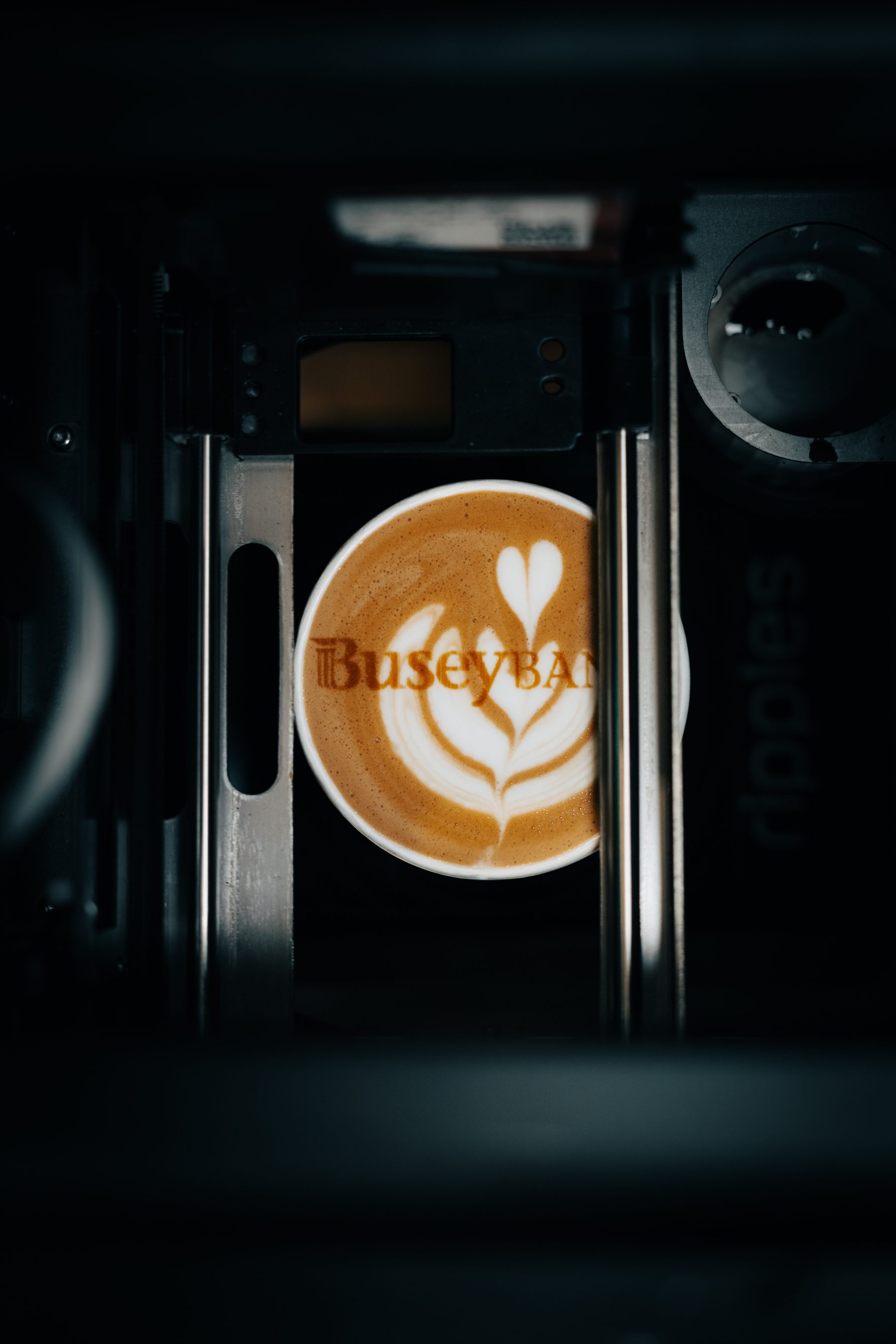
Every drink made to order at the Busey Bank executive event — Kansas City, MO
A FRAMEWORK FOR EVENTS PEOPLE REMEMBER
We've been to a lot of corporate events on both sides of the cart. Here's what we've distilled from the ones that actually work.
1. Anchor the experience to something physical
People remember what they touched, tasted, and held. The agenda is forgotten by the next morning. The iced cinnamon toast latte they had while talking to a colleague they hadn't seen in six months? That's the thing that comes back up in conversation. Build your event around at least one physical, sensory anchor point — something people interact with directly rather than just observe.
2. Create natural gathering points
The worst corporate event layouts are ones where everyone is immediately seated facing forward. You've killed the social dynamic before it even starts. Instead, build in spaces and stations that require movement and create natural clusters. A coffee cart does this organically — people form a line, wait together, make small decisions together, and the conversation starts before you've even planned an icebreaker.
3. Match the quality of the experience to the quality of your brand
This one gets missed constantly. Companies will spend significant money on a venue or a speaker and then put out stale hotel-lobby coffee in paper cups. The mismatch is jarring, and people notice it even if they can't explain why the event felt slightly off. Every touchpoint should reflect the standard of the organization. If you're a premium financial institution, your coffee should be premium. If your brand is known for quality, the experience should feel like quality from the parking lot to the goodbye.
4. Give people something to talk about that isn't work
The best corporate events give people permission to be human for a minute before they have to be professional. A great coffee experience — especially one with latte art or a personalized cup label or a barista who actually engages — gives people something neutral and enjoyable to talk about. That's not trivial. Shared enjoyment is one of the fastest routes to genuine connection, which is what you're actually trying to build at these events.
5. Think about arrival, not just the agenda
The first ten minutes of a corporate event set the tone for everything that follows. If people walk in and immediately feel like they're waiting for something to start, the event never fully shakes that energy. If people walk in and there's something worth experiencing right now — a great cup of coffee, a beautifully set up cart, a barista who greets them — the energy is entirely different. Design arrival intentionally.
"The first ten minutes of a corporate event set the tone for everything that follows. Design arrival like it's the most important part of the agenda — because it is."
WHAT HAPPENED AT BUSEY BANK
When we set up for the Busey Bank executive event in Kansas City, we weren't just there to pour coffee. We were there to be part of the experience they were trying to create — one that said something specific about who they are as a company and how they think about the people in that room.
The setup was intentional. The cart was clean and professional. Every drink was made to order, from scratch, by a barista who knew the equipment and cared about the output. The menu matched the moment — not overwhelming, but genuinely premium. And what happened organically was exactly what good event design is supposed to produce: people clustered around the cart before the event officially started, conversations formed, the energy in the room was warm and alive before the first agenda item hit.
Executives who'd flown in from out of state got something that reflected the quality of the institution they'd traveled to represent. Employees who work hard and don't always feel the investment the company makes in them got a moment that said plainly — you matter enough for us to do this right.
That's what the right event experience does. It doesn't just check a box. It communicates something that a slide deck can't.
PRACTICAL NOTES FOR EVENT PLANNERS
If you're planning a corporate event in Kansas City and trying to figure out how to make it land, here are the questions worth asking before you finalize the logistics:
- What do you want people to feel when they walk in — not what do you want them to hear or see, but feel?
- Where are the natural gathering points, and are you designing for them or against them?
- Does every vendor and touchpoint at this event reflect the quality of your brand, or are there obvious mismatches?
- What's the one thing people will still be talking about on Friday?
- Are you giving people a reason to connect with each other, or just a room to sit in together?
Corporate coffee catering for Kansas City companies is one of the highest-leverage additions to any event budget. It's not a luxury line item — it's a functional one. It creates interaction, signals quality, and gives people something genuine to gather around before you ask them to engage with the hard stuff on the agenda.
If you're planning a corporate event, an executive gathering, an employee appreciation event, or any company-wide function in the Kansas City metro — we'd be glad to talk through what the right setup looks like for your specific event, headcount, and brand.
That's what we do. We bring the whole production — the La Marzocco machine, the trained barista team, the branded experience — and we make your event better the moment people walk through the door.